Most deals fail our test. That is the point.
First, the work. One unit, one camera, five states — this is what “value-add” means when we say it.
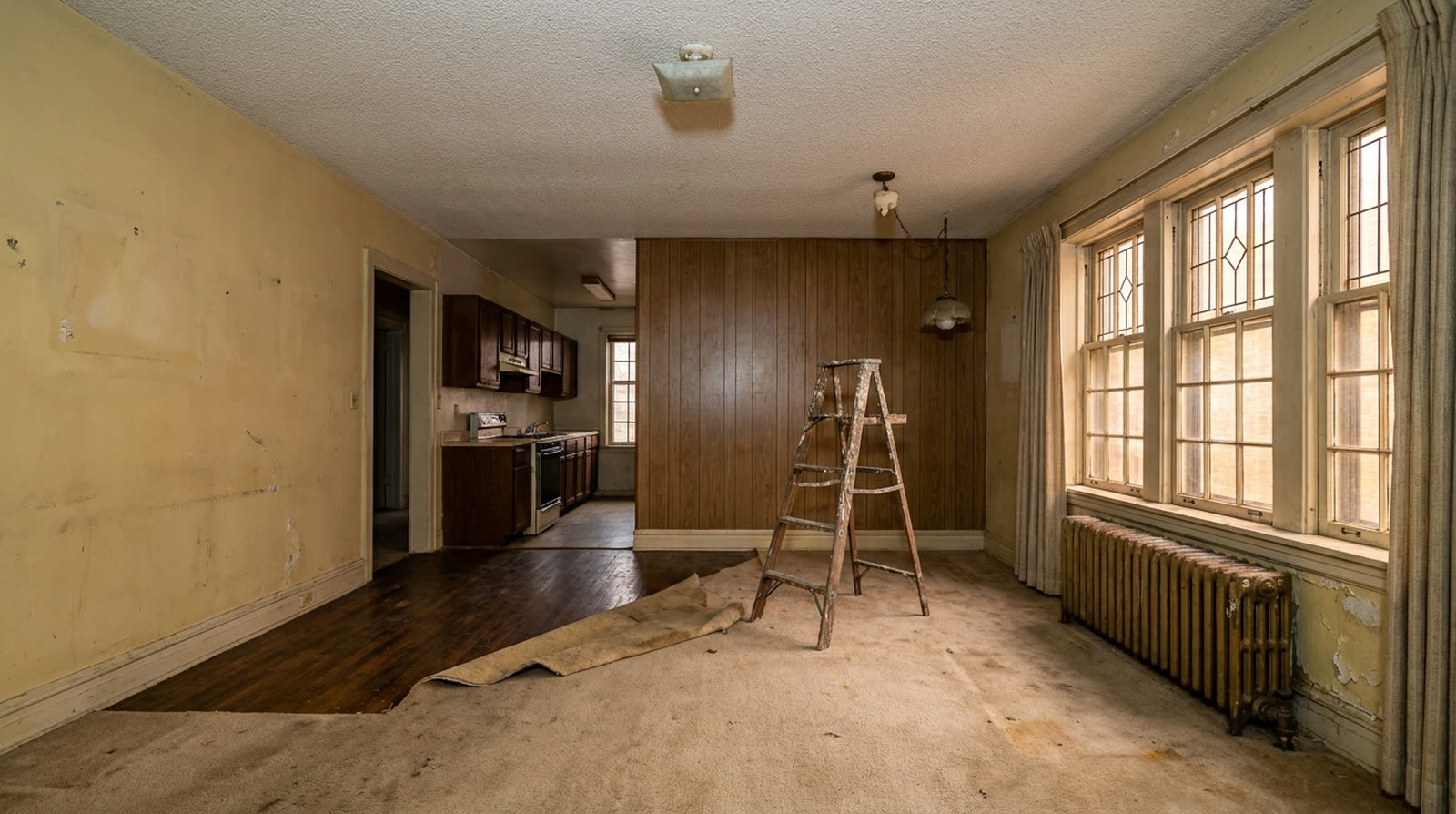
Tired, dated, under-rented. And structurally honest.
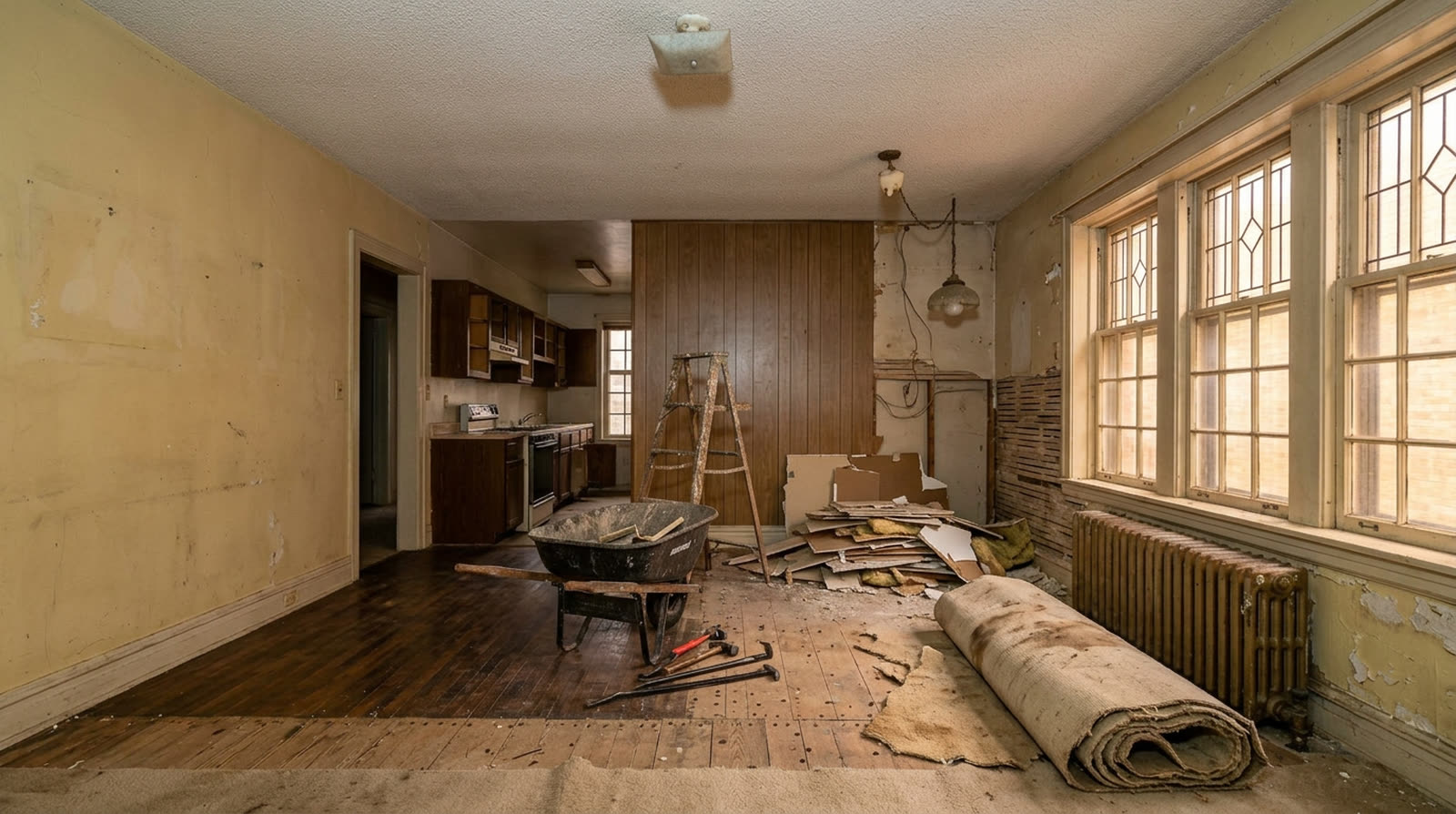
Everything cosmetic comes out. Nothing structural is trusted untested.

Down to brick and bones — where a building tells the truth.

New systems behind the walls first. The visible part comes last.
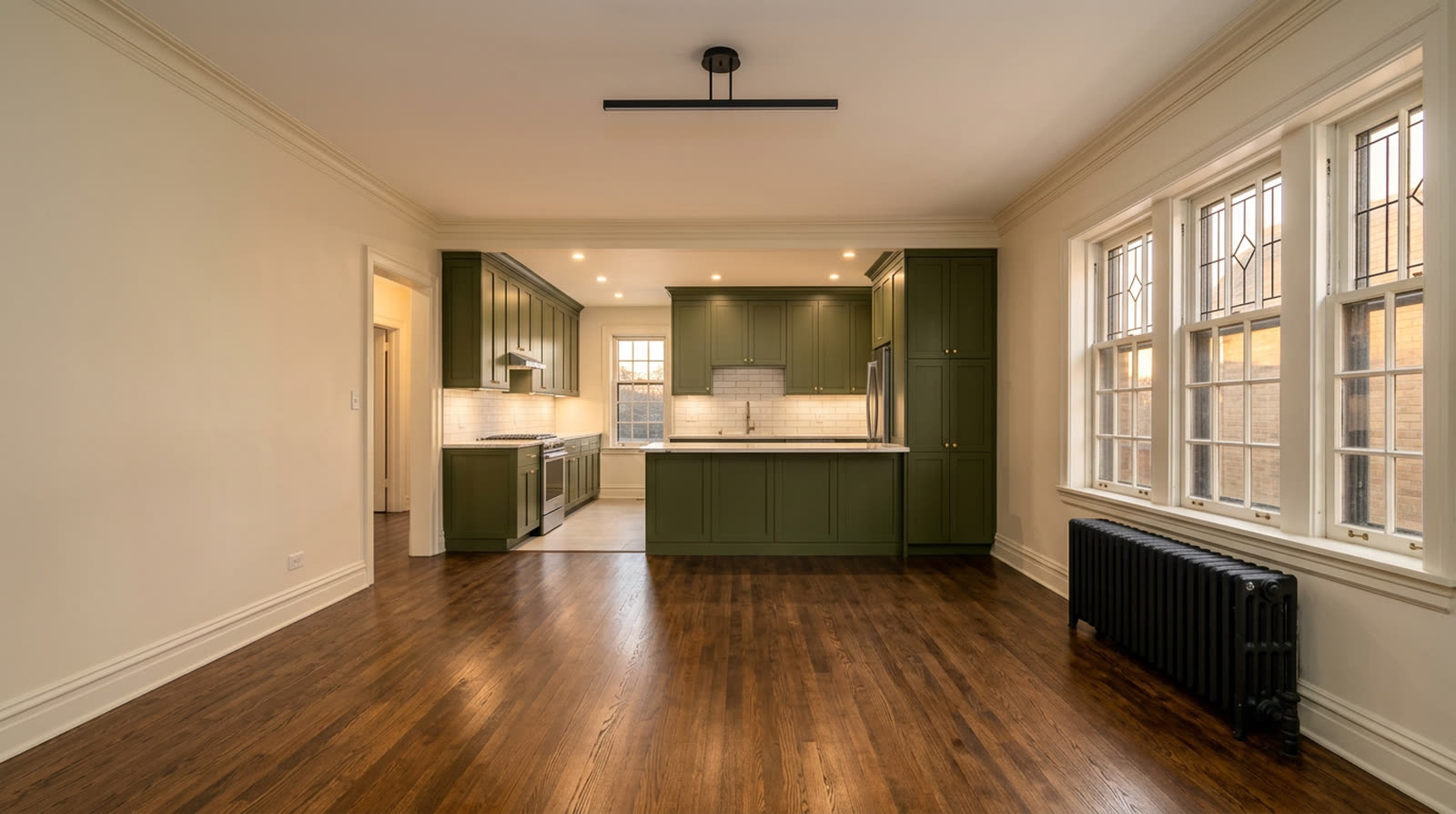
Restored oak, restored radiator, a kitchen worth staying for. Higher standard, higher rent.
This page explains how we evaluate real estate — not to sell you anything, but because we believe investors deserve to see the machinery. Use it to evaluate any operator, including us.
Underwriting, in plain English
Underwriting is the arithmetic of skepticism. We verify actual income rather than projected income, use real operating expenses rather than brochure ratios, assume conservative rents, and stress-test every debt structure against higher rates and slower lease-ups. If a deal only works in the optimistic case, it doesn't work.
The criteria we refuse to bend
Durable markets with diversified employment. Assets that cash-flow from acquisition, not after a hoped-for turnaround. Debt the property can carry in a bad year, not just a good one. A margin of safety in the basis — the price must protect us before the plan does.
Why long-term ownership
Real estate rewards patience: amortization, tax-advantaged depreciation, and rents that compound over decades. Flipping is a transaction business; ownership is a compounding business. We build for the second.
Want the full framework — the math, the tax treatment, and the questions to ask any sponsor? Request the Playbook. Prefer a conversation? Introduce yourself.
Common questions
What does Middle Coast Holdings invest in?
Middle Coast acquires and operates multifamily and mixed-use real estate in resilient Midwest markets, focusing on durable, cash-flowing assets underwritten with conservative assumptions and held for the long term.
How does Middle Coast underwrite a property?
Every opportunity runs through the same engine: verified income and actual operating expenses, conservative rent assumptions, stress-tested debt scenarios, and required margins of safety. Fewer than 2% of opportunities analyzed meet the published criteria.
What makes Midwest multifamily different from coastal markets?
Midwest markets historically offer steadier pricing, stronger cash-flow yields relative to purchase price, and less speculative volatility than coastal markets. The trade-off is slower appreciation — which is why disciplined operations and long-term ownership matter more here.